Your Most Valuable System Is About to Retire
A five-step playbook for capturing tribal knowledge before it walks out the door

Every plant has one. It doesn't show up on the asset register, it has no license fee, and nobody wrote the manual. It knows that Press 4 runs hot on humid afternoons, that the scrap rate climbs when you switch resin lots, and which supplier's "same part" isn't quite the same. It's the person who gets called at 2 a.m. when the line goes down.
And in a lot of plants, that system has a retirement date.
We spend a lot of time talking with manufacturers about ERP, MES, sensors and AI. But when we walk a floor, the most valuable "system" we find is usually a person with 25 or 30 years on the job, and the knowledge in their head is rarely backed up anywhere. Losing it doesn't look like an outage. It looks like a slow creep: longer changeovers, more scrap, more "we used to know how to fix that."
The clock is already running
This isn't a someday problem. A 2024 study by Deloitte and the Manufacturing Institute projects U.S. manufacturers could need as many as 3.8 million new workers between 2024 and 2033, and that 1.9 million of those jobs could go unfilled if skills and applicant gaps aren't addressed. Part of that need comes from Baby Boomers retiring out of the workforce.
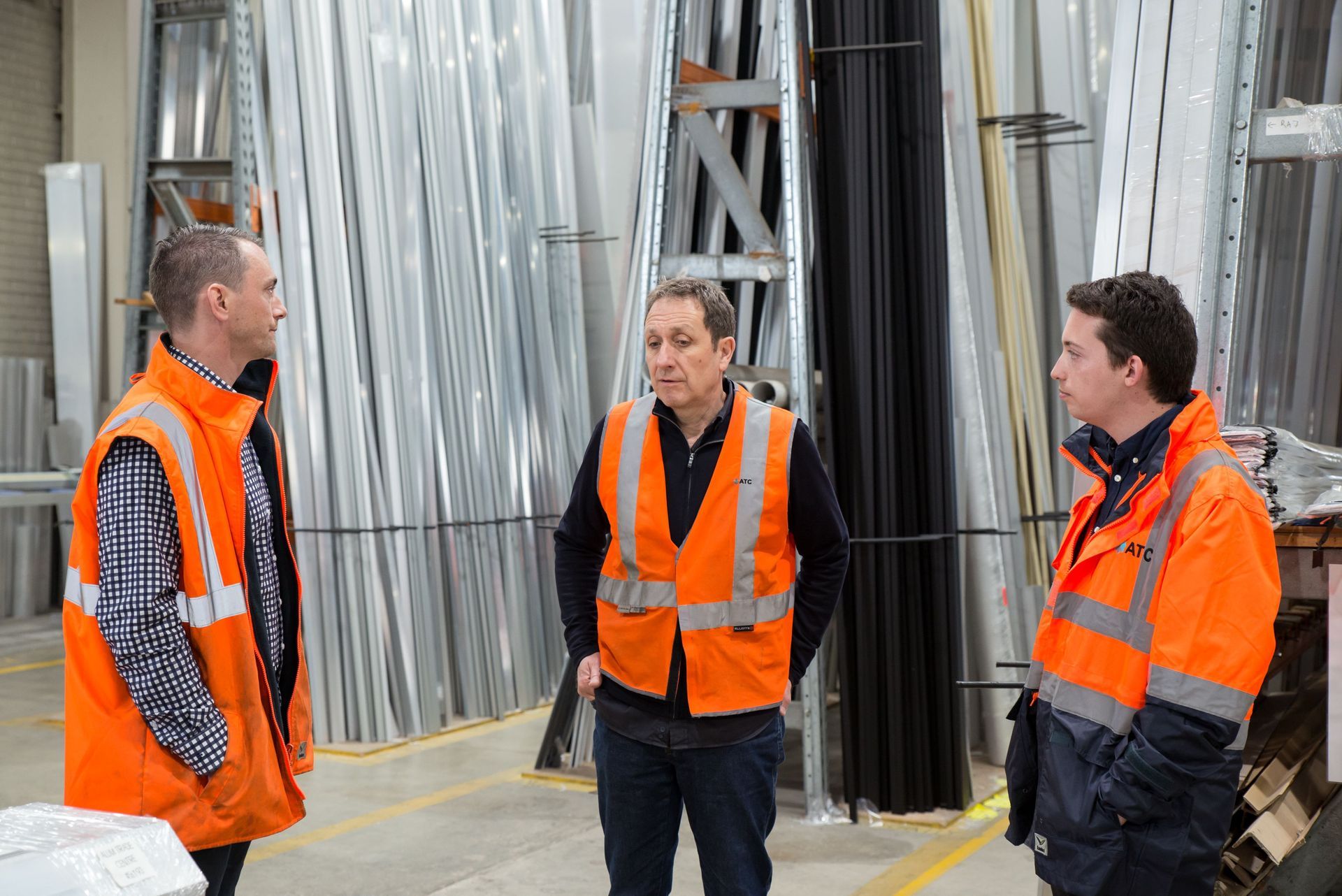
For a 150-person plant, the national numbers matter less than a short list of names. Sit down with your supervisors and ask: Who can't you live without? Most teams can name three to five people in under a minute. That list is your risk register.
The uncomfortable part is that those people often carry knowledge that took decades to build and will take weeks to lose. A two-week notice is not a knowledge transfer plan.
Why "just write it down" doesn't work
The usual response is to hand the veteran a binder template and ask them to document what they know. It almost never works, and it's not because they're unwilling.
Most tribal knowledge isn't a procedure. The procedure is usually already on file somewhere (maybe). What's missing is the judgment around it: the sound a bearing makes before it fails, the workaround for the fixture that never got fixed. Experts don't know what they know. Ask them to write it down and you'll get the steps everyone already follows.
The other trap is the opposite: buying a knowledge platform and assuming the content will show up. Software is a container. If nobody is drawing the knowledge out, you end up with a well-organized, expensive, empty library.
We treat knowledge capture as an operations project, not an IT project. It needs an owner, a priority list and time on the schedule, the same as a changeover reduction or a 5S push.
A five-step capture playbook
Here is the approach we use with clients. None of it requires new software to start.
- Map the risk. List the people whose departure would hurt, and for each one, the situations where others call them. Think breakdowns, changeovers, quality escapes, customer quirks, supplier quirks. The calls are the knowledge.
- Rank by pain. Score each knowledge area on two questions, 1 to 5 each: how bad is it if this knowledge walks out, and how soon could it walk out? Multiply. Start at the top of the list, not with whoever volunteers.
- Shadow, don't survey. Pair the expert with a capable successor on real work for short, scheduled blocks. Have a third person record it: phone video of the job, photos of the setup, and a running list of "why did you do that?" answers. The best material comes from the moment the expert does something that isn't in the procedure.
- Capture in the format the floor will use. A two-minute video or three annotated photos at the machine beat a twelve-page document in a shared drive. Keep each piece small, tied to one asset or one task, and findable by the person standing there.
- Prove it transferred. Knowledge is captured when someone else can do the job without calling the expert. Have the successor run the task with the expert watching, hands in pockets. If they get stuck, that gap is your next capture session.
Quick checklist for each knowledge area:
- ☐ Expert and successor named
- ☐ Pain score assigned
- ☐ Capture sessions on the production schedule, not "when things slow down"
- ☐ Content stored where operators can reach it at the machine
- ☐ Successor has done the task solo at least once
- ☐ Owner assigned to keep it current
Where technology fits (and where it doesn't)
Technology earns its place after you know what you're capturing and who will use it. Not before.
Once the playbook is running, the tools that help most are boring ones: a way to record and tag short videos by asset, digital work instructions operators can pull up at the station, and a searchable home for troubleshooting notes tied to your maintenance history. AI search and assistants can make that library much easier to query. But they can only answer from what you've captured. An AI tool pointed at an empty or messy library gives confident, wrong answers.
When you do evaluate tools, judge them on the floor, not in the conference room. Can an operator with gloves on find the right clip in under a minute? Can a supervisor update a step without calling IT? Does it work on the plant's actual Wi-Fi? Those answers matter more than any feature list.
And start small. One line, one critical asset, one retiring expert. Prove it there, then expand.
Questions to take back to your team
- If our three most experienced people gave notice tomorrow, which jobs would stop or slow down?
- Who do our operators call when something goes wrong that isn't in the procedure?
- Do we know who the successor is for each of those people, and have they worked side by side this month?
- Where would a new hire look for answers at the machine today, and would they find anything?
- Who owns knowledge capture here, and how much time on the schedule do they actually have for it?
Your most valuable system doesn't need an upgrade. It needs a backup, and you still have time to make one.
—
T to Z Consulting helps manufacturers move from where they are to where they need to be: Industry 4.0 assessments, knowledge management, vendor-agnostic software selection and implementation guidance. Reach out at atitze@ttoz.io.